페이지

레이블이 자연 nature인 게시물을 표시합니다. 모든 게시물 표시

2018년 5월 10일 목요일

여름에도 녹지 않는 얼음 동굴: Ice Caves that never melt

The Ice Caves That Never Melt, Even In Summer

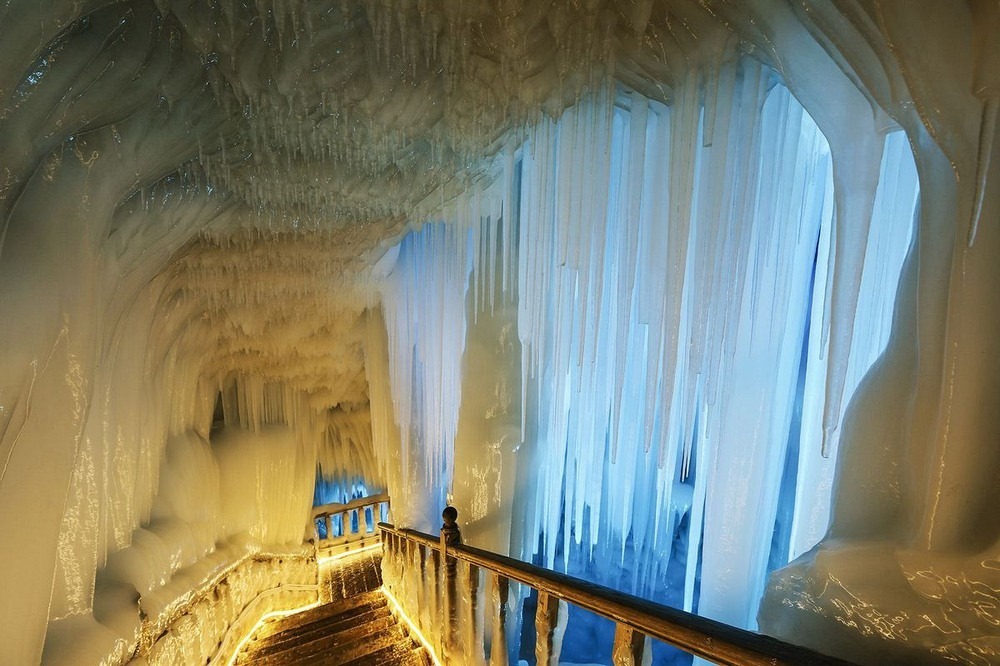
In the mountains of the Shanxi province in China, is the country’s biggest ice cave—an 85-meter deep bowling pin shaped subterranean structure set into the side of the mountain. Its walls and floors are coated with thick layers of ice, while large icicles and stalactites stretch from the ceiling to floor. The Ningwu Cave has the unique ability to stay frozen throughout summer even when the outside temperature climbs into the high teens.
Across continental Europe, Central Asia, and North America are many such ice caves where winter lasts all round the year. The majority of these ice caves are located in cooler regions, such as Alaska, Iceland and Russia, where the year-long low temperature helps keep the caves naturally cool and frozen. However, ice caves also exist in warmer climates.
ningwu-ice-cave-6
The Ningwu Ice Cave in China. Photo credit: Zhou Junxiang/Image China
Most of these caves are what is known as “cold traps”. These caves have conveniently located chimneys and exits that allow cold air to enter during the winter, but not the warm air in summer. In winter, the cold dense air settles into the cave, displacing any warmer air which rises and exits the cave. In summer, the cold cave air remains in place as the relatively warm surface air is lighter and cannot enter.
The ice inside the cave also acts as a buffer that helps stabilizes the temperature inside the cave. Any warm air entering the cave is immediately cooled by the ice before it can cause any significant warming of the cave’s inside. Sure, it melts some ice, but the ambient temperature inside the cave stays pretty much constant. The reverse is also true: in winter, when very cold air cascades in, any liquid water in the cave freezes, releasing heat and stopping the cave’s temperature from plummeting too low.
For ice caves to form there must also be sufficient quantities of water available over the right period of time. In winter the climate must be such that the mountains are sufficiently covered in snow, and in summer the temperature should be high enough to cause the snow to melt but without significant warming of the air which streams into the caves. There needs to be a delicate balance between all these factors for an ice cave to form and maintain itself.
eisriesenwelt-cave
The largest ice cave in the world is Eisriesenwelt, located in Werfen, Austria, about 40 km south of Salzburg. The cave stretches for more than 42 kilometers. Photo credit: Michael & Sophia/Flickr
The Decorah Ice Cave in Iowa, the US, is one of the largest caverns containing ice in the American Midwest. The cave remains relatively ice free during fall and early winter. During this period, chilly winter air enters the cave and lowers the temperature of the rock walls. When snow starts to melt in spring, the melt water seeps into the cave and freezes upon contact with the still-cold walls, reaching maximum thickness of several inches in May-June. Ice often remains inside the cave until late August, while outside temperature breaks into the high thirties (high nineties for Americans).
coudersport-ice-mine-1
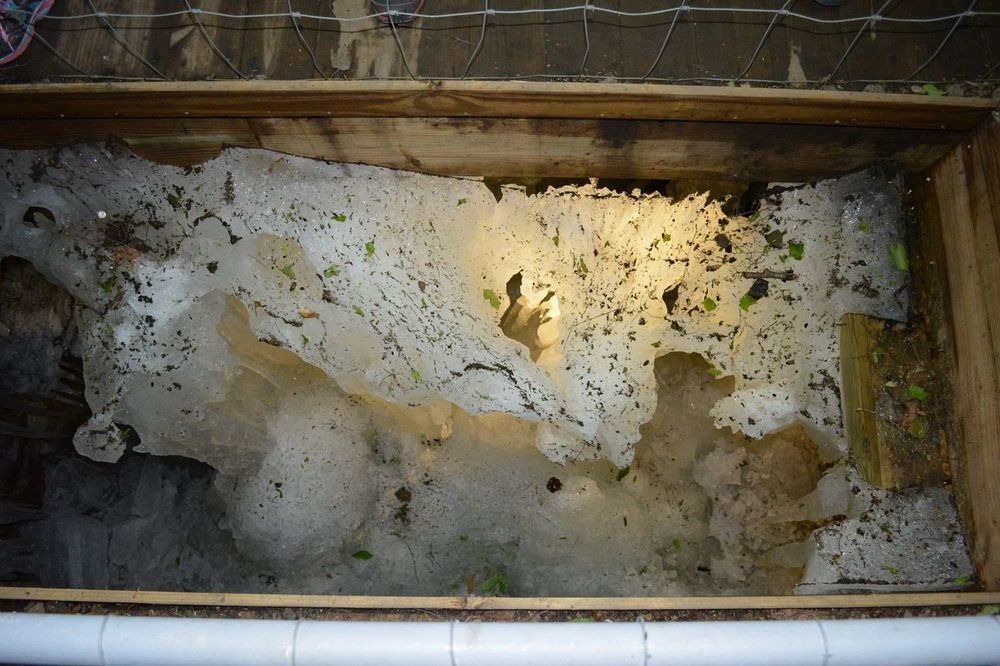
A similar phenomenon is seen at Coudersport Ice Mine in Pennsylvania. It’s a small pit, where ice forms only during the summer months, and melts away in winter. Photo credit: rivercouple75/Tripadvisor
booming-ice-chasm
The Booming Ice Chasm in the Canadian Rockies in Alberta is known for its incredible acoustics. It is said that as rocks tumble down and crash to the cave floor, 140 meters below, it causes booming echoes. The cave was discovered only in 2005 on Google Earth. Photo credit: Francois-Xavier De Ruydts
ningwu-ice-cave-1
The Ningwu Ice Cave in China. Photo credit: Zhou Junxiang/Image China
ningwu-ice-cave-2
The Ningwu Ice Cave in China. Photo credit: Zhou Junxiang/Image China
ningwu-ice-cave-3
The Ningwu Ice Cave in China. Photo credit: Zhou Junxiang/Image China
ningwu-ice-cave-4
The Ningwu Ice Cave in China. Photo credit: Zhou Junxiang/Image China
ningwu-ice-cave-5
The Ningwu Ice Cave in China. Photo credit: Zhou Junxiang/Image China
ningwu-ice-cave-7
The Ningwu Ice Cave in China. Photo credit: Zhou Junxiang/Image China

2016년 4월 2일 토요일

아마존의 아름다운 야생의 모습: The Amazing sights in Wild Amazon

The Amazon rain forest is a moist broad-leaf forest that covers most of the Amazon Basin of South America. This basin encompasses 7,000,000 square kilometers (2,700,000 sq mi), of which 5,500,000 square kilometers (2,100,000 sq mi) are covered by the rain forest. The Amazon represents over half of the planet's remaining rain forests, and it comprises the largest and most species-rich tract of tropical rain forest in the world. 

Take a tour of the sights and sounds of the amazon rain forest...
amazon forest


Wet tropical forests are the most species-rich biome, and tropical forests in the Americas are consistently more species rich than the wet forests in Africa and Asia.  


amazon forest

As the largest tract of tropical rainforest in the Americas, the Amazonian rainforests have unparalleled biodiversity. 


amazon forest

One in ten known species in the world lives in the Amazon Rainforest. This constitutes the largest collection of living plants and animal species in the world. 
 
amazon forest


amazon forest


amazon forest

 
The region is home to about 2.5 million insect species, tens of thousands of plants, and some 2,000 birds and mammals. 


amazon forest

 To date, at least 40,000 plant species, 2,200 fish, 1,294 birds, 427 mammals, 428 amphibians, and 378 reptiles have been scientifically classified in the region. 


amazon forest


amazon forest


amazon forest

One in five of all the bird species in the world live in the rainforests of the Amazon, and one in five of the fish species live in Amazonian rivers and streams. Scientists have described between 96,660 and 128,843 invertebrate species in Brazil alone. 


amazon forest


amazon forest


amazon forest

The biodiversity of plant species is the highest on Earth with some experts estimating that one square kilometer (247 acres) may contain more than a thousand types of trees and thousands of species of other higher plants. According to a 2001 study, a quarter square kilometer (62 acres) of Ecuadorian rainforest supports more than 1,100 tree species. 


amazon forest


amazon forest


amazon forest


amazon forest


amazon forest


amazon forest


amazon forest


amazon forest


amazon forest


amazon forest


amazon forest


amazon forest


amazon forest


amazon forest


amazon forest


amazon forest


amazon forest


amazon forest


amazon forest


amazon forest


amazon forest

2016년 1월 12일 화요일

자연의 신비

놀라운 자연의 신비 22가지.


이 22개의 사진은 우리가 얼마나 놀랍고 독특한 행성에 살고있는지 다시한번 보여준다. 이렇게 신비하고 엄청난 자연광경을 어디에서 볼 수 있겠는가? 당신에게 가장 인상적인 사진은 무엇인가?

천둥번개가 무섭다면? "이곳"으로 절대 이사오지 말길. 이곳 베네수엘라의 리오 카타툼보(Rio Catatumbo)에서는 1년 중 160일은 하루에 10시간씩, 한시간에 160번 간격으로 천둥과 번개가 치기 때문이다!
imgur/fiucj


인도양에 위치한 크리스마스섬(Christmas Island)에는 1,200만마리이상의 게가 서식하고 있다. 늦가을에 게떼가 짝짓기를 위해 숲에서 나와 바닷가로 이동한다. 번식을 위한 붉은물결의 집단이주는 이러한 장관을 이룬다!
imgur/fiucj
바위처럼 보이지만, 사실은 살아있는 생물이다! 이 매력적인 해양생물은 칠레의 해변에 볼 수 있다.
imgur/fiucj
imgur/fiucj


파키스탄에 위치한 거미 서식지가 범람할 때, 이 기어다니는 생명체들은 나무를 은신처로 삼아 거미줄로 뒤덮어버린다.
imgur/fiucj
imgur/fiucj


이 특이한 구름층은 산악지형에 강한 풍류가 발생할 때 생기는 진동에 의해 형성된다.


얼어붙은 머리카락같이 보이지만! 사실 가느다란 얼음형태에 슈도모나스 시린가에(pseudomonas syringae)라는 박테리아가 덮힌것이다. 그 결과 얼음이 동그랗게 말린 형태가 되었다.
imgur/fiucj


반짝이는 신비로운 초록빛 오로라는 지구상에서 가장 아름다운 자연광경중 하나이다. 오로라는 바람입자가 움직이면서 자기장을 벗어나 대기권으로 들어오면서 발생한다. 거기에서 가스원자와 만나 하늘을 아름답게 물들이게 되는 것이다. 
imgur/fiucj


이 사진을 한번 더 살펴보자. 강 안에 강이? 이 현상은 멕시코에서 발견된다. 더 무거운 입자가 강 바닥으로 가라앉으면서 강 안의 강 형태를 형성해 놀라운 광경을 보여준다!
imgur/fiucj


이 바닷속 불빛은 플랑크톤이 물 안에서 움직이면서 발사하면서 바다를 파란카펫으로 물들인다.
imgur/fiucj


투르크메니스탄의 이 천연 분화구는 "지옥으로 가는 입구(Gate to Hell)"라 불린다. 일렁이는 불꽃은 1971년에 분출된 후 계속 타오르고 있다!
imgur/fiucj
imgur/fiucj


이 엄청난 번개는 화산이 분출할 때 발생하는 많은 양의 에너지에 의해 발생하면서 숨막히는 광경을 연출한다!
imgur/fiucj


최대 350kg까지 나가는 바위들이 켈리포니아 데스 벨리(Death Valley)에서 사람이나 기계없이 스스로 돌아다닌다. 과학자들은 최근에 그 원인을 밝혀냈다. 겨울철 발생하는 서리와 얼음이 지면을 너무 매끄럽게 만들어서, 바위가 모래사장에 덮힌 얇은 살얼음위로 미끌어진다는 것이다.
imgur/fiucj


누가 이런 그림을 그려 자연을 훼손했을까? 그 누구도 아닌 대자연이다! 무지개빛 유칼리나무는 필리핀과 인도네시아에서 자라며, 나무껍질이 죽으면서 다양한 색깔의 씨를 생성한다. 그로 인해 여러 색깔층이 선명하게 나타나는 것이다. 연한 녹색이 진한 녹색으로 바뀌고, 또 파란색, 보라색, 분홍색, 주황색, 빨간색으로, 마침내 갈색으로 바뀐다.
imgur/fiucj
imgur/fiucj


인도네시아 자바섬의 카와 이젠(Kawah Ijen)화산에서 솟아오르는 이것은 파란색 용암이 아니다. 이는 1,000도 가까이 되는 용암이 대기의 산소와 만나 나타나는 반응이다. 이는 순식간에 화염을 일으켜 폭발한 후, 화산 주위로 액체가 되어 흐르면서 어디에서도 볼수 없는 장관이 펼쳐진다!
imgur/fiucj


이 탄자니아에 있는 소금호수는 염분이 너무 강해 동물시체를 끔찍한 소금형상으로 만들어버린다. 오싹하면서도 매력적인 광경을 말이다.
imgur/fiucj

무지개 나무와 스스로 움직이는 바위, 그리고 강 안의 강, 이 모두는 우리가 살고있는 지구가 지닌 놀라운 신비이다! 이 사진들을 보고 입이 다물어지지 않는다면, 주위 사람들과 이 경이로운 광경을 공유해보자.